
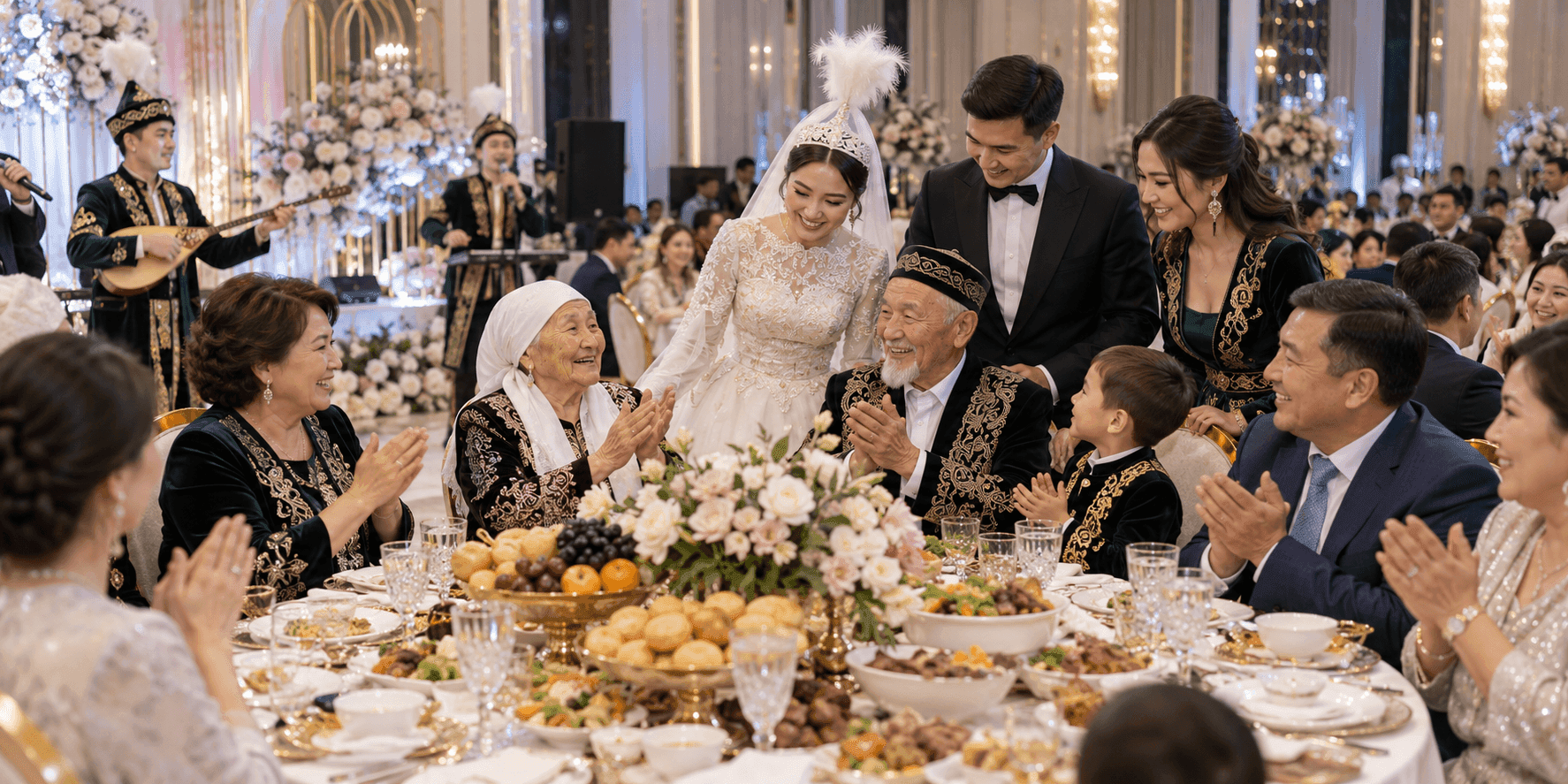
Toi Today: How Kazakhstan’s Celebration Industry Is Changing
Why Kazakh toi is becoming more predictable, how wedding markets differ between Astana and southern Kazakhstan, and what guests truly value today.
Kazakh toi changes along with the country. In some places, a wedding is booked six months in advance, while in others the decision on the host is made literally a few weeks in advance. At the same time, the market for artists and show programs is increasingly becoming common to different regions of Kazakhstan.
Southern Toi: holiday almost every day
The practice of the southern regions of the country is still surprising: holding a toi from Tuesday to Sunday is quite common there. The holiday has long become not only a long-awaited event, but also a constant form of communication - a large family and friendly networking dedicated to the special occasion.
Therefore, the planning horizon is different. Booking a host a month in advance or even later is a common practice in the south of Kazakhstan. In Astana, a good restaurant and a sought-after host are often booked six months in advance.
The example of Dauren Amreev, one of the capital’s experienced hosts, is illustrative. After 12 years of living in Astana, he returned to his native Shymkent, but continues to regularly hold events in the capital. An established customer base and reputation are stronger than any advertising: the calendar is formed by flights and banquets in different regions of the country.
One artist market for the whole of Kazakhstan
If you look at the industry on a national scale, sometimes you get the feeling of one big “Toi package”. For several wedding seasons after the pandemic, approximately one pool of artists, hosts and pop stars has been operating on the market.
When an agency in Astana is looking for a star who is already in the city or arriving in transit, the list of familiar names is repeated week after week. The era when Western artists or pop stars from neighboring countries were regularly invited to Kazakh weddings is noticeably a thing of the past.
The same thing happens with theater groups, dancers and musicians. The industry has entered an adaptation phase - to stable packages and understandable scenarios.
Predictability is not necessarily a problem
At different holidays you can see similar artists and a familiar sequence of numbers. But this doesn't necessarily disappoint guests. Increasingly, what comes to the fore is not the number of numbers in the concert program, but the emotions that people experience together.
It's expensive to develop a new show. Rehearsal spaces, instruments, props, costumes, filming and editing of presentation materials are just the beginning of the artist’s list of expenses. In the current economic climate, experimentation is becoming more difficult.
But to say that Toi culture has stopped developing would be wrong. Kazakh toi has been and remains an important social and cultural space. The scenery, technology and artist market change, but the main value remains: the opportunity to come together, share joy and support each other.